Ask a small business owner whether they have a website, and there’s a good chance you’ll hear this: “No, but we have an Instagram page. Customers DM us there.”
It’s a fair answer. Social media is free, fast to set up, and it’s where your customers already spend their time. So when it comes to a website vs a social media page, it’s tempting to think the page alone is enough.
For a while, it might be. But if you want your business to grow steadily, rank on Google, and be taken seriously by new customers, there’s a catch. A social page is a great place to meet people. A website is where you build a business.
You Don’t Own Your Social Media Page
This is the part most owners never think about until it goes wrong.
Your Instagram or Facebook page lives on someone else’s platform, under someone else’s rules. Accounts get hacked. Pages get restricted for no clear reason. Reach drops overnight when an algorithm changes. Some businesses have lost years of followers in a single day.
A website works differently. Your domain, your content, and your customer enquiries belong to you. Nobody can switch it off because a policy changed.
Google Can’t Find You on Instagram the Way It Finds a Website
Think about how you look for a local service yourself. Most people type something like “interior designer near me” or “best CA in Lucknow” into Google. The results are mostly websites, not Instagram profiles.
If you only have a social page, you’re invisible to everyone who is actively searching for what you sell. Those are the customers with the highest intent, ready to call or buy today. A website with decent SEO puts you in front of them without paying for a single ad.
A Website Builds Trust in a Way a Page Can’t
Be honest: if you found an unfamiliar business, and it only had a social page, would you pay them an advance?
Many customers hesitate. A proper website with clear services, real photos, a contact page, reviews, and business details shows you’re an established business, not a side hustle that could disappear next month. This matters even more for higher-value purchases like interiors, education, healthcare, B2B services, or anything over a few thousand rupees.
Social Media Is for Attention, a Website Is for Decisions
Here’s a simple way to picture it.
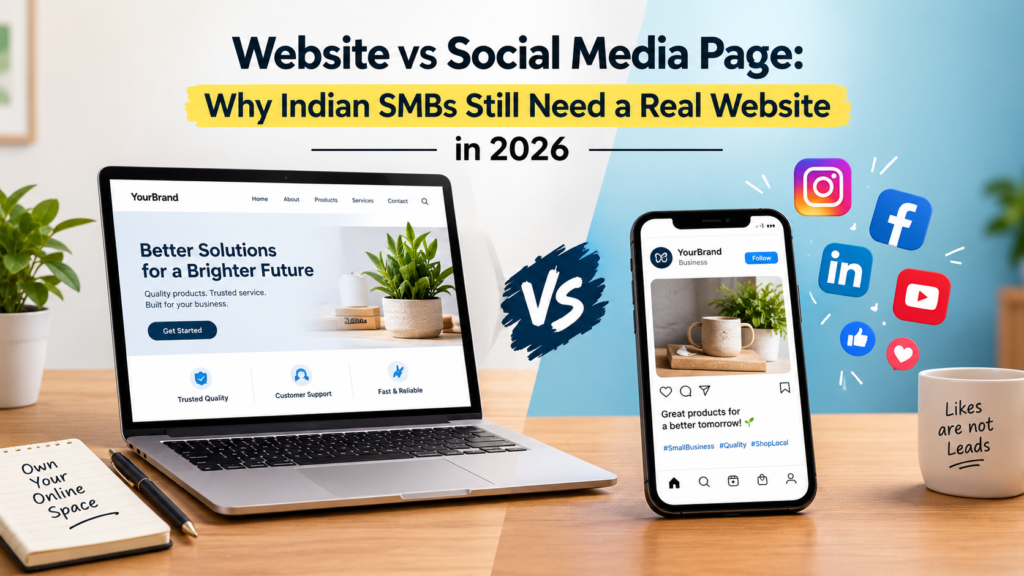
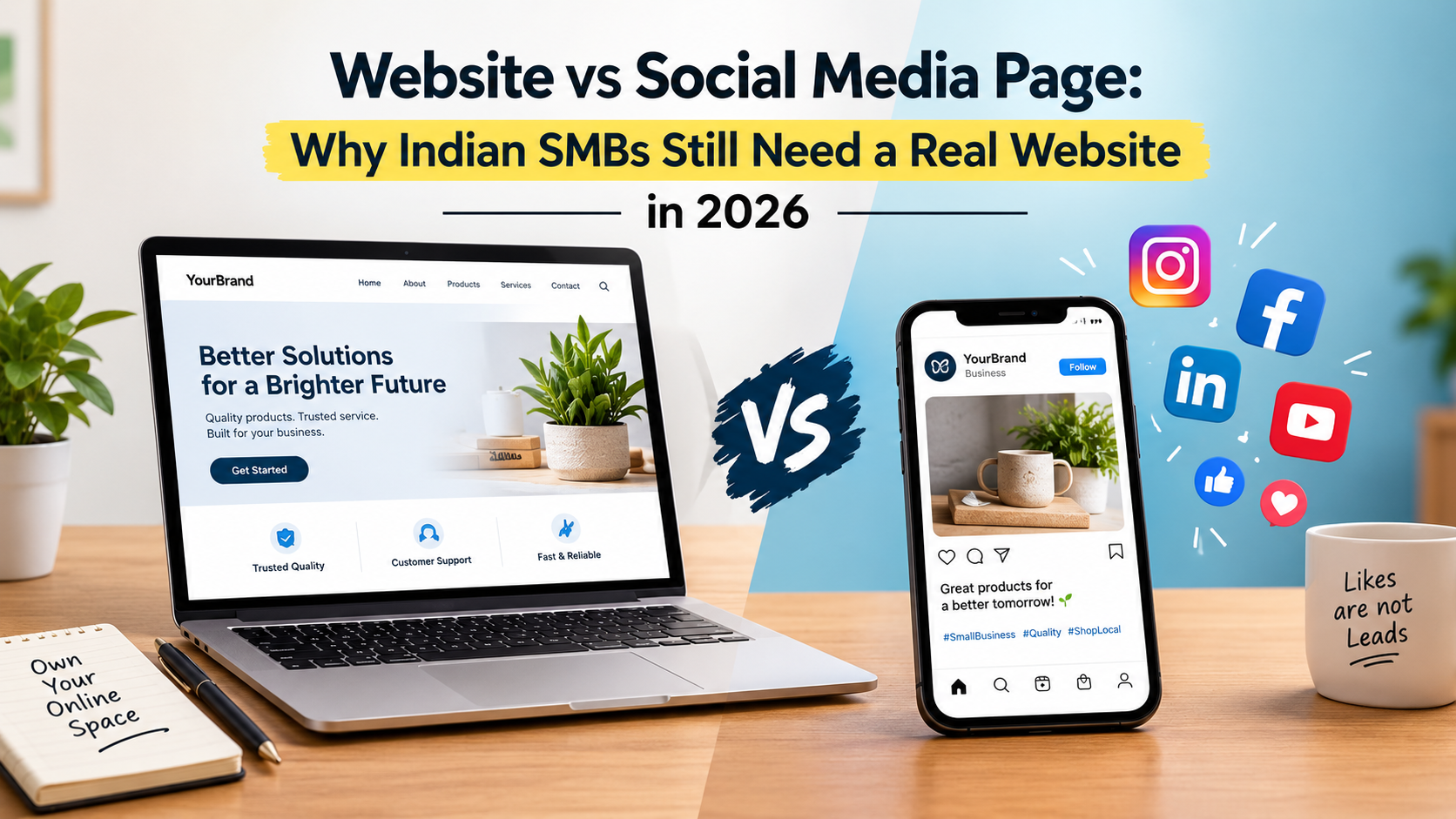
Social media is like a shop’s signboard and the crowd walking past. It grabs attention, shows your personality, and starts conversations. Your website is the shop itself. It’s where someone reads the details, compares prices, checks your work, and finally decides.
On social media, people scroll fast and forget faster. On a website, they come with intent. Give them a clear page, an easy enquiry form, and a WhatsApp button, and you turn passing interest into actual leads.
You Can Run Better Ads with a Website
If you run, or plan to run, Meta ads, this point is worth remembering.
Sending ad traffic to an Instagram profile usually leads to casual browsing and a few follows. Sending the same traffic to a well-built landing page or website leads to enquiries, form fills, and calls, and you can actually track what’s working. You can set up pixels, measure cost per lead, and improve your campaigns over time.
Without a website, you’re spending money on attention you can’t fully measure or convert.
So Do You Have to Choose One?
No, and you shouldn’t. The smartest approach is to make them work together.
- Use social media to show your work, share offers, build a community, and stay visible.
- Use your website as the home base where people learn everything, trust you, and get in touch.
- Connect the two by putting your website link in your bio, posts, and ads, and adding your social links on the website.
Think of social media as the front door that draws people in, and the website as the room where the real conversation happens.
The Bottom Line
A social media page is a good start, and if it’s all you have today, don’t feel bad about it. But if you’re serious about growing, a real website is what turns a following into a business. It gives you visibility on Google, credibility with new customers, and a place you actually own.
The good news is that a professional website is far more affordable and quicker to set up than most owners expect.