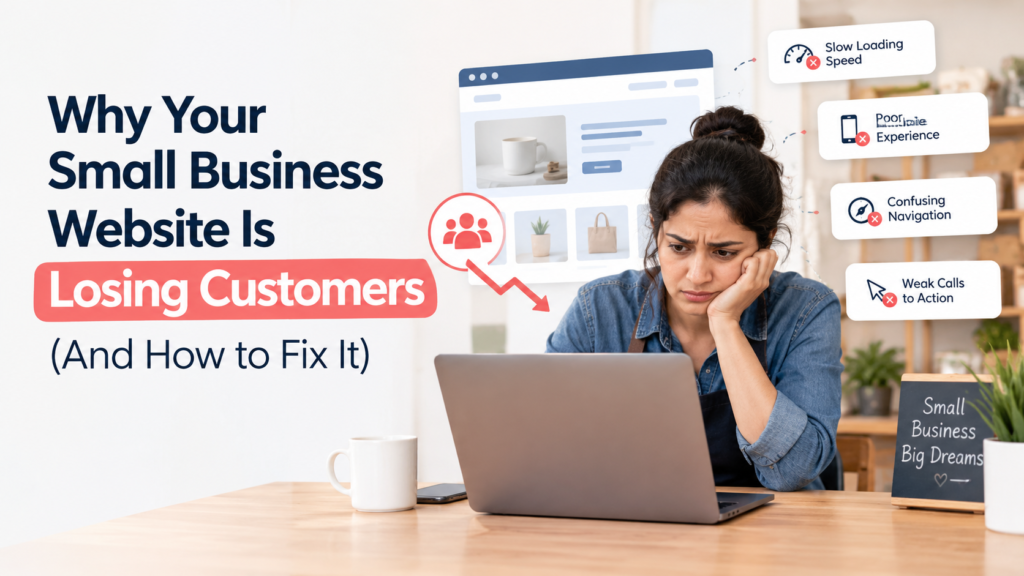
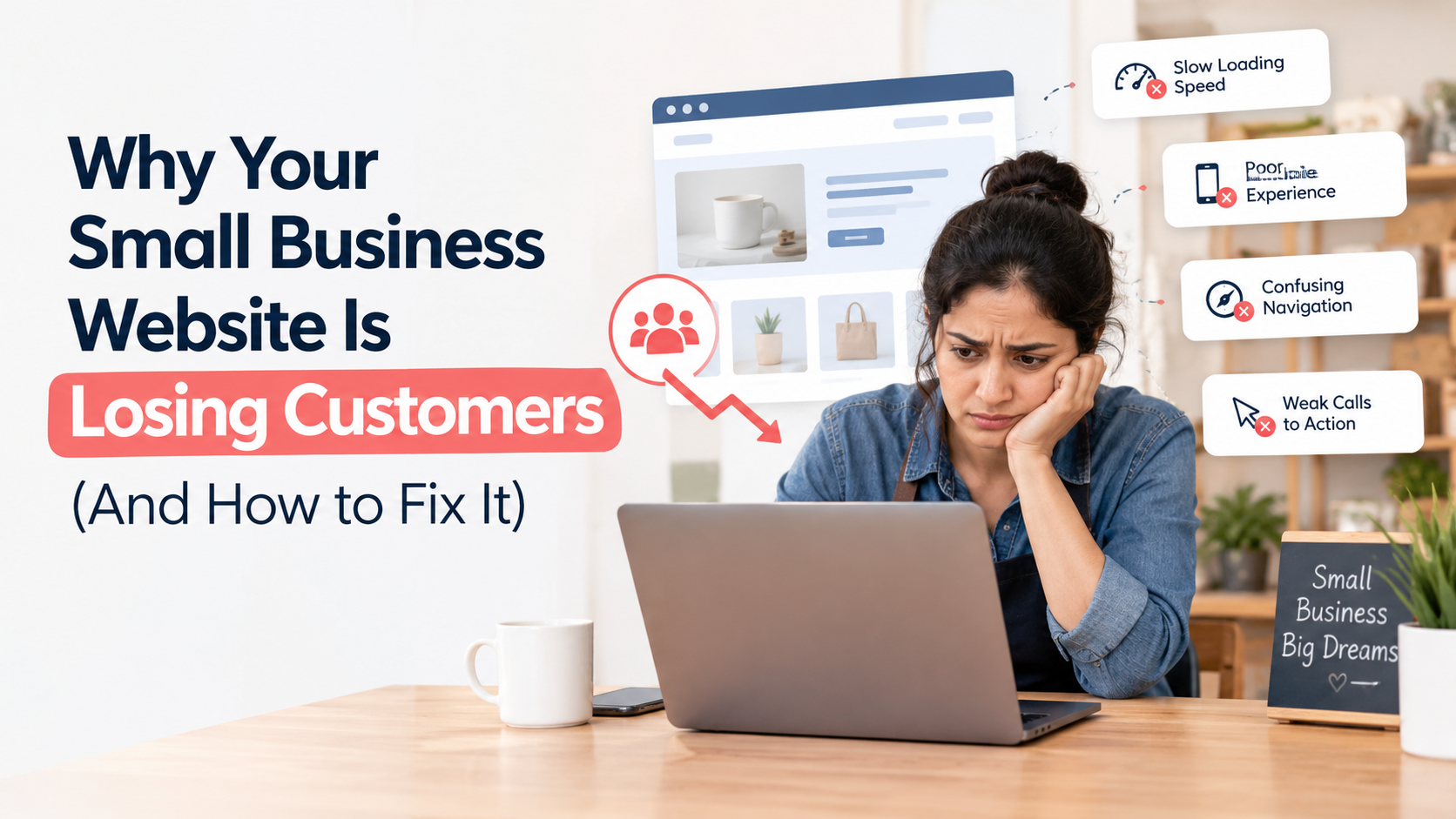
You built a website. You paid for hosting, picked a nice template, maybe even hired someone to design it. And yet — the phone doesn’t ring as much as it should. Inquiries trickle in slowly. People land on your site and just… leave.
If that sounds familiar, you’re not alone. Most small business owners assume a website is doing its job simply because it exists. But a website that just “exists” isn’t the same as a website that works. In fact, a badly performing website can quietly cost you more customers than having no website at all — because now people are finding you, and walking away unimpressed.
Let’s break down the real reasons your website might be losing customers, and what you can actually do about each one.
1. It Takes Too Long to Load
Here’s an uncomfortable truth: most visitors won’t wait more than 3 seconds for your website to load. Not 10 seconds. Not even 5. Three.
If your homepage is stuffed with large, uncompressed images or unnecessary plugins, you’re bleeding visitors before they even see what you offer. This hits mobile users especially hard, since a large chunk of Indian internet traffic still runs on moderate mobile connections.
The fix: Compress your images, remove unused scripts, and test your site on Google’s PageSpeed Insights. Even shaving off 1-2 seconds can noticeably improve how long people stay.
2. Visitors Don’t Know What You Actually Do
You’d be surprised how many business websites make people guess. A vague headline like “Welcome to XYZ Enterprises” tells a visitor nothing. Within 5 seconds of landing on your site, a stranger should know exactly what you sell, who it’s for, and why it matters to them.
The fix: Your homepage headline should answer one question clearly: “What’s in it for me?” Skip the corporate jargon. Say what you do, for whom, and how you help — plainly.
3. There’s No Clear Next Step
A confused visitor doesn’t take action — they leave. If your website doesn’t tell people what to do next (call now, book a demo, fill this form, WhatsApp us), most won’t figure it out themselves.
The fix: Every page should have one obvious call-to-action. Not five competing buttons — one clear next step, repeated where it makes sense.
4. It Doesn’t Work Well on Mobile
If your buttons are too small to tap, your text requires zooming, or your layout breaks on smaller screens, you’re losing a majority of your traffic. Mobile users typically make up well over half of small business website visits today.
The fix: Open your own website on your phone right now. Actually use it the way a customer would. If it frustrates you, it’s frustrating them too.
5. There’s No Trust Signal Anywhere
Would you buy from a business with no reviews, no testimonials, no “about us,” and no way to verify they’re real? Neither will your visitors. Trust is often the invisible reason a sale doesn’t happen.
The fix: Add customer testimonials, real photos (not generic stock images), your business registration or years of operation, and any certifications or client logos you have. Small credibility signals go a long way.
6. Your Website Isn’t Built for Search Engines
If your website was never optimized for SEO, it might be practically invisible on Google — meaning your best marketing asset is only being seen by people who already know your business name.
The fix: Make sure each page targets a specific keyword your customers actually search for, has a proper meta title and description, and loads with clean, structured content. This is a long-term investment, but it’s the difference between a website that attracts customers and one that just sits there.
7. It Hasn’t Been Updated in Years
An outdated design, dead links, or old contact information don’t just look unprofessional — they actively signal that your business might not be active or reliable anymore.
The fix: Treat your website like a living asset, not a one-time project. Regular updates, fresh content, and periodic design refreshes keep it aligned with how your business — and your customers’ expectations — evolve.
The Bottom Line
Your website is often the very first impression a potential customer forms of your business — before they ever speak to you, visit your store, or see your product. If it’s slow, confusing, or untrustworthy, you’re losing customers you never even knew you had a shot at.
The good news? None of these problems require starting from scratch. Most can be fixed with focused, practical improvements — the kind that pay for themselves the moment a visitor becomes a customer.